
Thank you for Subscribing to Agri Business Review Weekly Brief

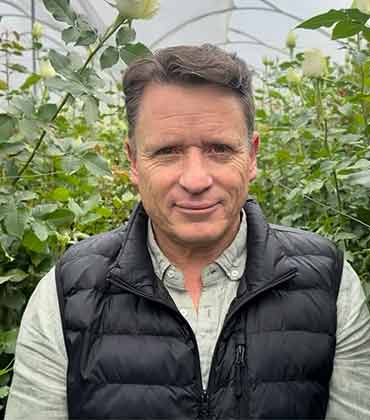 Juan Ponce, CEO
But I believe the next stage of growth for our industry will require us to look beyond the flower itself. The opportunity is not simply to grow more flowers. It is to create more reasons for people to buy them.
Convenience Can Expand the Occasion
Consumers increasingly expect products to be easy to understand, easy to purchase and easy to take home. Floral should be no exception.
A beautiful arrangement can lose part of its appeal if purchasing it creates inconvenience. Retailers also face their own challenges, labor, preparation, handling, display requirements and shrink all influence whether a floral program succeeds.
This creates an opportunity for growers and suppliers to think beyond what happens at the farm. We should ask what happens when the product arrives at the store, how employees handle it, how consumers carry it through checkout and what happens on the journey home.
At Dream Farms, this type of thinking led us to develop our Grab Me! Non-Spill Vase. The important lesson, however, is not one particular product. It is the mindset behind it, innovation should solve a real problem for the retailer or consumer.
Flowers Need Stories, Not Just Occasions
The floral industry has traditionally performed strongly around established occasions such as Valentine's Day and Mother's Day. These moments will always matter, but relying primarily on traditional floral holidays limits the category's potential.
Flowers are inherently emotional products. They can represent celebration, gratitude, personality, memories, places and experiences. That gives our industry an enormous opportunity to create new reasons for consumers to engage with flowers throughout the year.
At Dream Farms, this thinking inspired our Artistic Flower Collections, which use themes and storytelling to create an emotional connection around the bouquet. But the broader principle applies across the industry, when flowers tell a story, they can become more than a product on a display. They can become something consumers identify with.
-
The future of the floral industry is about creating more reasons to buy flowers.
Growers and Retailers Need to Innovate Together
I also believe the traditional relationship between growers and customers is changing.
The grower's responsibility should not end when a good flower leaves the farm. Growers understand production; retailers understand their stores and shoppers. Bringing those perspectives together can create better products and stronger floral programs.
Some of the most useful innovations begin with a simple customer observation, Could this be easier to display? Could we reduce store labor? Could the packaging be reusable? Could we create something specifically for this consumer or occasion?
The best response is often not a sales pitch. It is listening, developing, testing and improving. That requires growers to see themselves not simply as suppliers, but as innovation partners.
Shortening the Distance Between Farm and Consumer
Closer collaboration also means reconsidering the supply chain.
Every additional step between harvest and the consumer can affect time, handling and freshness. Traditional distribution will continue to play an important role, but farm-direct models and more flexible fulfillment options give the industry additional ways to serve customers.
Technology and logistics increasingly allow growers to understand retail needs faster, respond to demand more precisely and, in some cases, bring the farm closer to individual stores and consumers.
The objective should not simply be speed. It should be creating a supply chain that protects quality while giving customers the flexibility their business requires.
The Opportunity Ahead
The future of floral design will still begin with an exceptional flower. There is no substitute for quality. But quality alone will not unlock the full potential of the category.
The companies that move our industry forward will combine great flowers with convenience, storytelling, responsible production, closer customer collaboration and continuous innovation.
We should continue asking how to grow better flowers. But we should also ask a bigger question, How can we make flowers easier to buy, more meaningful to give and more relevant to everyday life?
Because ultimately, our goal should not simply be to grow more flowers. Our goal should be to create more reasons for people to buy flowers.
When Premium Roses Must Perform Beyond Harvest
Premium rose purchasing becomes difficult when visual quality at the farm does not survive the trip to the retail floor. Stem strength and bloom size matter, but buyers also have to account for whether flowers arrive hydrated and graded to specification. A producer that performs well only at harvest can still create shrink or added handling later in the chain. The stronger comparison is how well quality holds through packing, transit, receiving and display preparation across repeated orders.
Consistency starts with cultivation and post-harvest discipline. Premium buyers should examine plant health and harvest timing, then look at grading tolerances and hydration practices. The practical measure is repeatability across orders rather than an exceptional sample. A premium specification has limited value if grade variation widens as retail programs scale. Vase life belongs in the same evaluation because weak post-harvest handling can erase much of the advantage created in the greenhouse. Buyers need confidence that quality controls continue after cutting and remain tied to the requirements of the florist or retailer receiving the product.
Distribution creates another point of separation. Traditional flower logistics often add handoffs between the farm and an import hub before product reaches its final destination, which can lengthen transit and complicate freshness management. Buyers should look closely at transit design, including route length and lead time, while testing whether the producer can accommodate different order patterns. Direct-to-location fulfillment can be especially relevant for independent florists or dispersed retail networks that value shorter chains and delivery to individual locations.
“Dream Farms’ patented non-spill vase allows arrangements to ship with water and arrive ready for display, reducing store-level handling.”
Product format also affects the economics of a premium rose program. Some buyers need bunches that fit established floral departments, while others need products requiring less labor after arrival. Ready-to-display arrangements and specialized packaging can reduce in-store preparation. Custom color treatments and themed presentations can serve a different merchandising purpose. The useful distinction is whether those formats answer an actual selling constraint rather than merely adding decorative variation. Store labor deserves separate attention because preparation after arrival can turn an attractive farm price into a more expensive retail program. A producer that responds closely to changing retail requirements can adjust varieties and presentation while protecting the consistency of the underlying flower.
Sustainability deserves scrutiny at the production level rather than as a broad brand claim. Buyers can examine farming practices and certification status, then consider how employment is supported around the growing operation. Those factors carry more weight when they are embedded in routine production decisions and can be assessed alongside product quality. Farm-level evidence is more useful than broad environmental language detached from cultivation practices.
Dream Farms grows premium roses in Ecuador and extends its role beyond bunch production through custom grading and post-harvest hydration, supported by retail-ready product formats and multiple fulfillment paths. Dream Farms’ patented non-spill vase allows arrangements to ship with water and arrive ready for display, reducing store-level handling. It supports Miami-based distribution as well as direct U.S. delivery through UPS, giving buyers flexibility in how flowers reach stores or other destinations. The farm is also Rainforest Alliance Certified. Product development responds to customer demand through new varieties and tinted products, alongside themed arrangements and specialized presentations. For buyers that want premium roses paired with flexible fulfillment and less preparation at the point of sale, Dream Farms merits close consideration.
...Read more
Company
Dream Farms
Management
Juan Ponce, CEO
Description
For decades, much of the floral industry has understandably focused on one fundamental objective, growing better flowers. Better varieties, stronger stems, larger blooms, longer vase life and more consistent quality remain essential. They always will.
